
Understanding the Sheriff’s Department: The Backbone of County Law Enforcement
Long before modern police departments existed, sheriffs were serving and protecting their communities. In fact, the office of sheriff is considered the oldest continuously operating law enforcement position in the world.
The word “sheriff” comes from the Old English term shire reeve — an official appointed to maintain peace and enforce the law on behalf of the crown in a county or “shire.” That role eventually carried over into early American government, where sheriffs became responsible for maintaining order, overseeing county jails, serving court documents, collecting taxes, and protecting local communities.
Today, sheriff’s departments continue to play a critical role in public safety — especially in rural communities like ours.
What Makes a Sheriff’s Department Different?
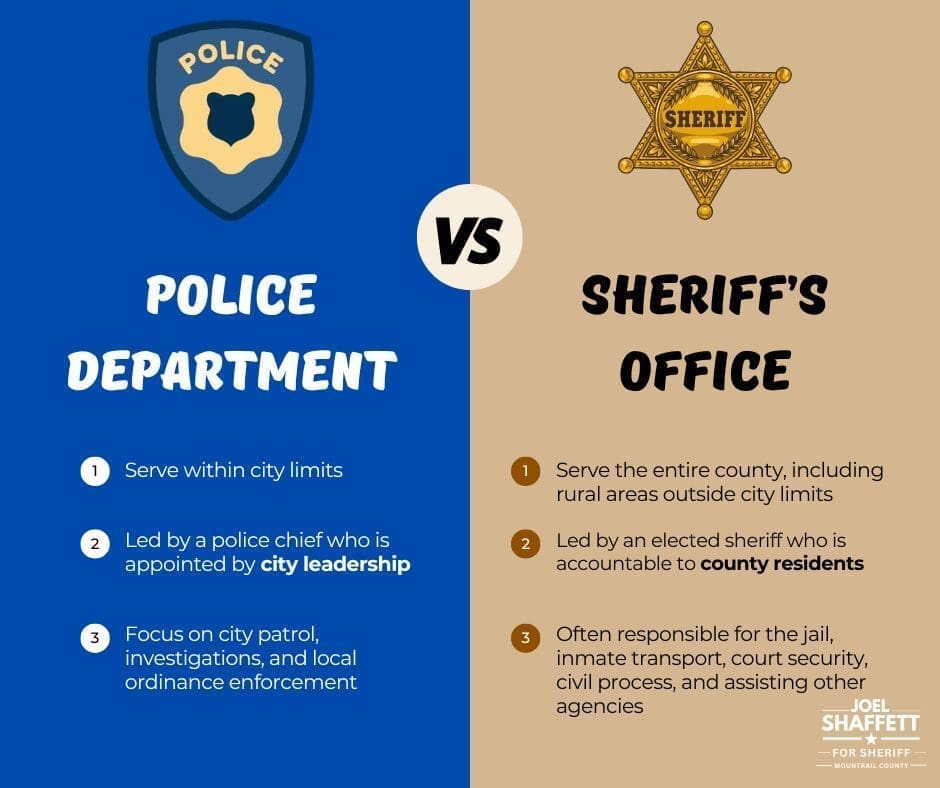
Unlike city police departments, sheriff’s departments typically serve the entire county, including rural areas and communities that may not have their own local police force.
The sheriff is also usually an elected official, meaning they answer directly to the people they serve — not a city council or appointed board.
That accountability matters.
Sheriff’s departments often handle a wide variety of responsibilities, including:
- Patrol and emergency response
- Criminal investigations
- Search and rescue
- Jail operations and inmate transport
- Court security
- Civil process service
- Community outreach and education
- Mutual aid support for local agencies
- Emergency management and disaster response
In rural counties, deputies are often expected to wear many hats. One day may involve responding to a medical call in a remote area, while the next could involve assisting with a crash investigation, supporting volunteer EMS, or helping another agency during a critical incident.
The Structure of a Sheriff’s Department
While every county operates a little differently depending on size and budget, most sheriff’s departments are organized into divisions designed to serve the community efficiently.
Sheriff
The sheriff is the elected leader of the department and is responsible for setting the vision, culture, and priorities of the agency. A strong sheriff focuses not only on enforcement, but also leadership, collaboration, accountability, and community trust.
Chief Deputy or Undersheriff
This position typically oversees day-to-day operations and helps manage departmental administration, staffing, budgeting, and policy implementation.
Patrol Division
Patrol deputies are usually the most visible members of the department. They respond to calls for service, enforce laws, assist motorists, investigate crashes, and serve as first responders during emergencies.
In rural communities, patrol deputies often work closely with volunteer fire departments, EMS services, and neighboring agencies.
Investigations Division
Detectives or investigators handle more complex criminal cases, gather evidence, conduct interviews, and work closely with prosecutors to build cases.
Corrections or Jail Division
Many sheriff’s departments oversee county jail operations, inmate care, transportation, and courthouse security.
Civil Process Division
Deputies in this role serve legal documents such as protection orders, subpoenas, eviction notices, and court paperwork.
Specialized Units
Depending on the county, sheriff’s departments may also have:
- K9 units
- SWAT or tactical response teams
- School resource deputies
- Search and rescue teams
- Crisis negotiation teams
- Water rescue or dive teams
- Drone operators
- Emergency management coordinators

Why Leadership Matters
The structure of a sheriff’s department only works when leadership sets the tone.
A sheriff influences department culture, training standards, communication, community relationships, and how deputies support one another. Good leadership creates a department that is proactive, professional, and connected to the people it serves.
Especially in smaller communities, trust matters. People want deputies who are visible, approachable, well-trained, and invested in the county they serve.
Public safety is strongest when law enforcement works collaboratively with the community — not separately from it.
Looking Ahead
Modern law enforcement continues to evolve, but the mission remains the same: protect and serve the community with integrity.
As counties grow and face new challenges, sheriff’s departments must balance tradition with innovation — supporting deputies with training, embracing collaboration between agencies, and building strong relationships with the people they serve every day.
That’s what strong leadership looks like.
And that’s why the office of sheriff still matters today.


Be the first to comment